
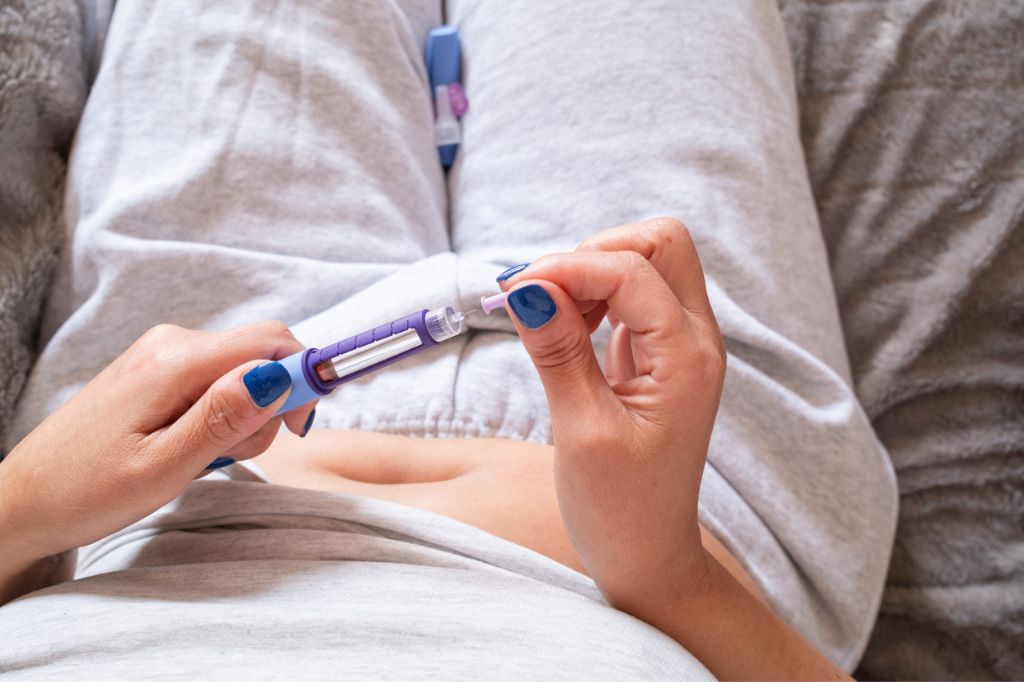
GLP-1 receptor agonists, the drug class that includes semaglutide (Ozempic, Wegovy) and tirzepatide (Mounjaro, Zepbound), have become some of the most widely prescribed medications in the country. Their ability to produce meaningful weight loss while improving blood sugar and cardiovascular risk factors has made them genuinely transformative for millions of patients managing obesity. But new findings presented at the American Academy of Orthopaedic Surgeons annual meeting raise a question most patients and their doctors aren’t yet discussing: could these medications be increasing the risk of tendon rupture?
For most people taking them, the absolute risk remains low. Still, the findings are specific and consistent enough that understanding them can shape how you exercise, how you monitor your body, and when to seek orthopedic care.
What the New Research Found About GLP-1s and Tendon Rupture
A research team at the University of Texas Medical Branch conducted a large retrospective study using electronic health records from more than 70 healthcare organizations across the United States. They matched 78,590 GLP-1 users with an equal number of non-users, carefully accounting for age, sex, BMI, diabetes status, and statin use, giving the findings a credibility that a simpler comparison couldn’t offer.
What five years of follow-up data revealed pointed consistently in one direction.
Three Major Tendon Types Were Affected Across the Board
In patients with obesity, GLP-1 use was associated with higher rates of several significant tendon ruptures. Rotator cuff tears occurred in 2.4% of GLP-1 users compared to 1.5% of non-users. Achilles tendon ruptures were 0.3% versus 0.2%, and pectoralis major tears came in at 0.8% versus 0.5%. Across all categories analyzed, GLP-1 users faced roughly 1.5 times the risk of these injuries compared with matched non-users.
Lawand was clear that the overall likelihood of a major tendon rupture remains below 1% for most injuries. A 1.5-fold relative increase on a low absolute baseline is still clinically meaningful when it shows up consistently across multiple tendon types in a study of nearly 80,000 patients per group.
The Pattern Held Even When Patients Had Both Diabetes and Obesity
Diabetes independently affects connective tissue health by altering collagen structure, the protein framework that gives tendons their strength. Knowing this, the researchers analyzed patients with both type 2 diabetes and obesity separately. Even within that subgroup, GLP-1 users had higher rates of rotator cuff, Achilles, peroneal, pectoralis major, and quadriceps tendon ruptures than matched non-users.
The association with GLP-1 use appears to stand independently of the patient’s metabolic disease.
Why These Medications May Increase Tendon Injury Risk
The exact biological mechanism hasn’t been established yet. Researchers have proposed several explanations worth understanding, because each one points directly to what patients can do to reduce their risk.
When the conditions around tendons shift, their capacity to handle mechanical load can change in ways that don’t announce themselves until something gives.
Rapid Weight Loss Can Strip Away the Muscles That Protect Tendons
When the body sheds weight quickly, muscle mass often decreases alongside fat, particularly without structured resistance training. Muscles and tendons function as a unit. Well-conditioned muscles absorb forces before they are transmitted to the tendon. When muscle loss accompanies rapid weight loss, tendons absorb more of the mechanical load, creating a mismatch that raises the risk of strain and rupture.
Lawand noted that patients who rapidly increase physical activity as they lose weight, without a supervised program guiding the progression, may be especially vulnerable during that transition period.
Appetite Suppression Can Deprive Tendons of Critical Nutrients
GLP-1 medications work by significantly suppressing appetite. For some patients, that suppression becomes extreme enough to compromise protein and micronutrient intake over time. Tendons are composed primarily of collagen, the structural protein that gives connective tissue its tensile strength. Producing and repairing collagen requires adequate protein intake, and when daily intake consistently falls short, the body’s ability to maintain tendon integrity can be compromised. Lawand cited potential malnutrition secondary to appetite suppression as one of the team’s leading theories.
How to Reduce Your Tendon Rupture Risk While on a GLP-1
These findings are not a reason to avoid GLP-1 medications. For many patients managing obesity, type 2 diabetes, or cardiovascular disease, the benefits substantially outweigh the risks. But a few deliberate habits can meaningfully lower your exposure to tendon injury while you take them:
- Prioritize resistance training. Building and maintaining muscle mass reduces the mechanical load your tendons must absorb on their own.
- Work with a registered dietitian. Adequate daily protein intake supports collagen repair, and a dietitian can help you hit the right targets during rapid weight loss.
- Increase physical activity gradually. Cardiovascular fitness improves faster than tendons adapt, so a structured program matters more than enthusiasm.
- Tell your orthopedic provider you’re on a GLP-1. Certain other medications also affect tendon health, and layering risk factors compounds vulnerability.
- Take early tendon symptoms seriously. Aching, stiffness, or swelling near a major tendon during or after activity warrants evaluation, not a toughing-it-out approach.
If You Have a History of Tendon Problems, Talk to Your Provider First
Alexander Sah, MD, co-director of the Outpatient Joint Replacement Program at the Institute for Joint Restoration in Fremont, California, put it plainly: someone with a personal or family history of tendon injury, or who has previously torn an Achilles or quadriceps tendon, may reasonably want to factor this data into the conversation with their prescribing physician. Deciding whether to start or continue a GLP-1 is a conversation best had with full information in hand.
When to See a Specialist for Tendon Pain on a GLP-1
Tendon ruptures rarely give a clear warning before they happen. Catching changes early often determines whether conservative care is possible or surgery becomes necessary.
If you’re taking a GLP-1 and notice changes around a major tendon, these symptoms warrant a prompt orthopedic evaluation:
- Sudden, sharp pain near a tendon, with or without a popping sensation
- Swelling, warmth, or tenderness that doesn’t resolve within 48 hours
- Difficulty bearing weight, reaching overhead, or using the affected limb normally
- New tendon pain that developed after starting or increasing the dose of a GLP-1
Catching Tendon Damage Early Changes the Treatment Equation
Tendinopathy, the gradual structural breakdown of tendon tissue that often precedes a full rupture, frequently responds well to physical therapy, targeted injections, or activity modification when identified before the damage is complete. A full rupture, by contrast, may require surgery and a significantly longer recovery. Early evaluation closes the window between manageable and serious.
Located in Fort Lauderdale, Orthopedic Specialty Institute serves patients throughout South Florida, including Broward, Palm Beach, and Miami-Dade Counties. If you’re taking a GLP-1 medication and have concerns about tendon pain or an increased risk of injury, our orthopedic specialists can help you understand your options. Request an appointment online today.
