
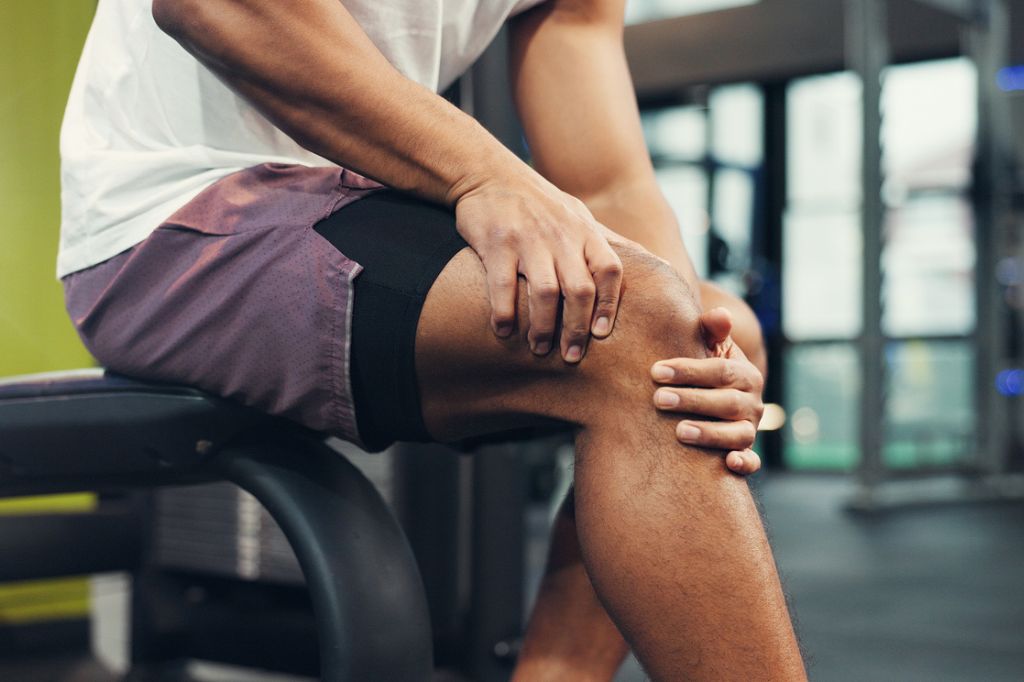
Almost everyone has heard it at some point: a pop, snap, or crunch from the knee while climbing stairs, standing up from a chair, or going for a morning run. Knee clicking is one of the most common complaints orthopedic specialists hear, and it nearly always comes with the same question: Should I be worried?
The answer depends on context. Some forms of knee clicking are completely harmless, a normal feature of how joints work. Others are early warning signs of structural problems that, if ignored, can worsen over time. Knowing the difference can save you from both unnecessary anxiety and unnecessary damage.
What’s Actually Causing That Sound?
The medical term for joint clicking, popping, or cracking sounds is crepitus, which refers to any noise or grating sensation produced by movement in a joint. It can range from a quiet, painless pop to a loud, grinding crunch that stops people mid-stride.
Several different mechanisms produce these sounds, and they don’t all carry the same meaning.
Gas Bubbles in the Joint Fluid
Your knee joint contains synovial fluid, a thick liquid that lubricates the cartilage surfaces and reduces friction during movement. This fluid contains dissolved gases. When you move your knee through certain ranges of motion, pressure changes inside the joint can cause tiny gas bubbles to form and collapse rapidly. The result is an audible pop.
Researchers have debated the exact mechanism for decades, but a 2015 study used real-time MRI imaging to show that the “crack” coincides with the formation of a gas cavity in the joint. This type of clicking is painless and not linked to any injury or disease.
Tendons and Ligaments Snapping Over Bone
Tendons and ligaments are tight bands of tissue that cross the knee joint. When the knee bends, these structures shift position slightly. If a tendon slides over a bony prominence and then snaps back into place, it creates a clicking or snapping sensation. This is especially common around the kneecap. Again, if there’s no pain involved, it’s usually not a structural problem.
Cartilage Wear and Damage
This is where knee clicking can become meaningful. The knee is lined with articular cartilage, a smooth, rubbery material that allows the joint surfaces to glide past each other. When cartilage breaks down, whether from age, injury, or overuse, the surfaces become rough and irregular. Movement across damaged cartilage produces a grinding or crunching sound called crepitus. Unlike bubble-pop clicking, this type of noise often comes with pain, stiffness, or swelling, and it tends to worsen over time.
Painless Knee Clicking: Mostly Harmless, But Pay Attention
A knee that clicks without pain is usually not a cause for alarm. Research supports this. A large 2018 study in Arthritis Care & Research followed more than 3,500 adults for several years and found that crepitus alone, without pain or swelling, does not diagnose knee osteoarthritis. However, frequent clicking was linked to a higher future risk, especially in people who already had early joint changes. In other words, many people have knees that crack and pop and never develop joint disease.
That said, “painless now” doesn’t mean “painless forever.” The same study found that when crepitus was accompanied by pain, the risk of developing osteoarthritis increased significantly. Noise plus symptoms is the combination that deserves attention.
When Knee Clicking Is a Warning Sign
Knee clicking becomes a clinical concern when it comes with other symptoms. Pain changes everything. So does swelling, instability, or a mechanical sensation of catching or locking.
Osteoarthritis
Osteoarthritis is the most common cause of painful knee crepitus. It’s a degenerative joint condition, meaning the cartilage that cushions the knee slowly wears away, leaving bone surfaces to rub against each other.
The CDC estimates that about 33 million adults in the United States live with osteoarthritis, making it the most prevalent joint disease in the country. Clicking and grinding in osteoarthritic knees typically worsen with activity and improve with rest, at least in the early stages.
Meniscus Tears
The menisci are two C-shaped wedges of cartilage that sit between the thighbone and shinbone, acting as shock absorbers. A torn meniscus, the most common knee injury in athletes, can produce clicking, catching, or locking sensations as torn fragments interfere with smooth joint movement. According to the American Academy of Orthopaedic Surgeons, joint line tenderness and a clicking or clunking sensation during movement are hallmark signs of a meniscal tear, particularly following a pivoting or twisting injury.
Patellofemoral Syndrome
Often called “runner’s knee,” patellofemoral syndrome, a condition where the kneecap doesn’t track properly in its groove on the thighbone, is a frequent source of anterior knee pain and clicking in younger, active patients. The kneecap can grind against the femoral groove, creating crepitus that’s often most noticeable when going down stairs or rising from a seated position.
Chondromalacia Patellae
Closely related to patellofemoral pain syndrome, chondromalacia patellae refers to irritation and softening of the cartilage under the kneecap. It commonly affects active individuals and is more frequent in younger people and women. Rather than a single clear disease, patellofemoral pain is considered a broad category of anterior knee pain often linked to overuse, muscle imbalance, or alignment factors. People typically notice discomfort during activity, stair climbing, squatting, or prolonged sitting, and some experience grinding sensations. A Sports Medicine review describes it as a common source of anterior knee pain in physically active populations.
Symptoms That Mean It’s Time to See a Specialist
Most people can distinguish between an annoying noise and a joint that’s sending distress signals. These are the warning signs that require professional evaluation:
- Knee clicking accompanied by pain, even if it’s mild or intermittent
- Swelling inside or around the knee joint that lasts more than 24 hours
- A catching or locking sensation, as if the joint briefly gets stuck mid-movement
- Instability or a feeling that the knee might give way
- Clicking that appeared suddenly after a fall, twisting injury, or collision
- Progressive worsening of noise and discomfort over weeks or months
Any of these patterns suggests something beyond routine joint noise. Structural problems in the knee rarely resolve on their own, and early intervention consistently leads to better outcomes than waiting until the damage compounds.
What a Specialist Will Look For
A thorough evaluation of knee clicking starts with a detailed history and physical examination. Your physician will assess range of motion, palpate for joint line tenderness, test ligament stability, and evaluate how your kneecap tracks during movement.
Imaging often follows. X-rays can reveal cartilage loss, bone spurs, or changes in joint space characteristic of arthritis. An MRI provides much greater detail on soft tissue structures, making it the preferred tool for evaluating meniscus tears, cartilage defects, and ligament injuries. In some cases, diagnostic ultrasound can assess tendon integrity in real time during movement.
The goal is to understand the underlying cause and determine whether treatment, from physical therapy and injections to minimally invasive arthroscopy or joint replacement, is warranted.
Managing Knee Clicking at Home
For painless clicking, consistent movement is your best friend. Keeping the muscles around the knee strong, particularly the quadriceps and hamstrings, reduces stress on the joint surfaces and supports proper tracking of the kneecap. Low-impact activities like swimming, cycling, and walking maintain joint health without overloading worn cartilage.
If clicking is accompanied by mild, occasional discomfort, anti-inflammatory strategies can help. These include avoiding prolonged sitting or kneeling, icing the joint after activity, and maintaining a healthy weight. Research published in Arthritis & Rheumatology found that each pound of body weight lost reduces the load on the knee joint by roughly four pounds with each step, making weight management one of the most effective tools for protecting arthritic knees.
These measures can provide meaningful relief for mild cases, but they’re not a substitute for evaluation when symptoms are worsening.
When to See a Specialist for Knee Clicking
Knee clicking alone, with no pain, no swelling, and no mechanical symptoms, is almost always benign. But the knee is a complex joint, and the structures inside it don’t always announce their problems loudly before they become serious. If your knee is talking to you, pay attention to what it’s saying beyond just the sound.
Located in Fort Lauderdale, Orthopedic Specialty Institute serves patients throughout South Florida, including Broward County, Palm Beach County, and Miami-Dade County. Our orthopedic specialists have extensive experience evaluating and treating knee conditions at every stage, from early cartilage changes to advanced joint disease. Request an appointment online today.
