
Surgery brings relief into sight, but the weeks and months that follow often feel like uncharted territory. When will you walk again? What does pain and swelling mean in the first days? How do you know if something is wrong? Understanding the answers before your procedure gives you a genuine advantage when healing begins.
Ankle surgery recovery unfolds in a sequence of phases, each with its own demands. Open reduction and internal fixation (ORIF), a surgery using plates and screws to stabilize a fractured ankle, follows a different path than total ankle arthroplasty, a joint replacement procedure for patients with advanced arthritis. Despite those differences, every procedure follows a common structure: immobilization, protected weight bearing, and active rehabilitation.
What the First Weeks of Ankle Surgery Recovery Look Like
The early weeks set the foundation for everything that follows. Pain and swelling peak during this phase, mobility is limited, and the choices you make now directly influence how well tissue heals downstream.
Managing Pain, Swelling, and Immobilization
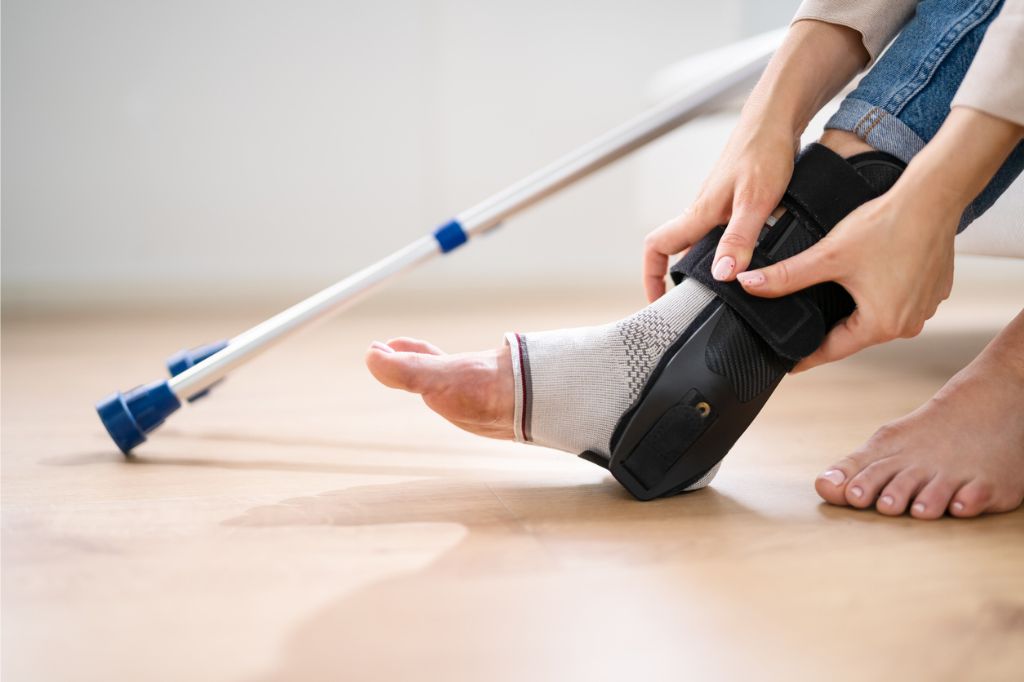
You will leave surgery in a splint, boot, or cast, depending on the procedure. Elevation is your most important tool. Keeping the ankle above heart level limits fluid buildup and reduces throbbing discomfort. Ice applied around the cast or compression wrap for 20-minute intervals provides additional relief. Pain medication works best when taken on a consistent schedule rather than waiting for discomfort to spike. Your surgical team will guide you through wound care, and any redness, warmth, or discharge at the incision site warrants a same-day call to your surgeon.
Understanding the Non-Weight-Bearing Phase
For most ankle procedures, placing weight on the operated foot is not allowed for two to six weeks. Crutches or a knee scooter keep you mobile while protecting the repair. Load applied before tissue has begun knitting to plates, screws, or sutured ligaments can compromise fixation and prolong recovery.
For patients with simpler fractures, early weight bearing as soon as two weeks after surgery has been shown to be as safe as waiting six weeks. Whether this applies to you depends on fracture type, fixation method, and your surgeon’s clinical judgment. Attempting it without explicit clearance is not worth the risk.
How Physical Therapy Rebuilds What Surgery Protected
Immobilization protects the repair, but it also causes surrounding muscles to weaken and the joint to stiffen. Physical therapy reverses these changes systematically. Starting rehabilitation at the right time makes a measurable difference in ankle performance at the one-year mark.
When Rehabilitation Begins and What to Expect
Most patients start formal physical therapy between two and six weeks after surgery, attending sessions two to three times per week. Even before formal rehab begins, simple ankle pumps performed in the early post-operative days support circulation and may reduce the risk of deep vein thrombosis, a blood clot that can form in a leg vein during prolonged immobilization. Research found that early functional exercise after ankle fracture surgery reduced complication rates compared with delayed initiation.
Exercises That Rebuild Strength and Balance
Early sessions focus on restoring the range of motion and reactivating the calf and stabilizing muscles. As the ankle tolerates more, your therapist advances the program. A typical progression looks like this:
- Ankle pumps and gentle range-of-motion circles performed seated or lying down
- Towel stretches and resistance band movements to restore flexibility
- Supported standing balance work and partial weight-bearing exercises
- Single-leg stability training and progressive strengthening
- Step-ups, squats, and walking pattern retraining for return to normal movement
Proprioception, the body’s ability to sense the ankle’s position during movement, receives specific attention throughout. Surgery disrupts these sensory pathways, and rebuilding them reduces the risk of re-injury after returning to activity.
How Long Does Ankle Surgery Recovery Take?
The honest answer is longer than most patients expect. Setting realistic expectations early prevents discouragement and helps you stay committed to the process when progress feels slow.
Factors That Shape Your Timeline
Age, overall health, surgical complexity, and adherence to rehabilitation all directly influence recovery speed. Smoking, diabetes, and poor circulation slow bone and tissue healing in measurable ways. A study following patients after ORIF for ankle fractures found that those who maintained better ankle function early were significantly more likely to return to pre-injury activity levels within one year.
Milestones to Anticipate Along the Way
For less complex procedures, most patients walk without assistance by six to eight weeks. By three months, pain and swelling have reduced enough for light daily activity. At the 6-month mark, many patients return to recreational movement. Full recovery, including restored strength, balance, and endurance, often takes nine to twelve months after major procedures. A study following 232 patients after surgical ankle fracture repair found that at one year, 88% reported little to no pain and 90% had recovered 90% or more of their pre-injury ankle function. That trajectory is worth holding onto during the harder weeks.
Warning Signs That Require Prompt Attention
Complications after ankle surgery are uncommon, but recognizing them early is key to keeping a manageable problem from becoming serious. Contact your surgeon promptly if you notice any of the following:
- Sudden worsening of pain not explained by increased activity
- Swelling that increases after the first two weeks rather than improving
- Fever above 101 degrees Fahrenheit or chills developing after discharge
- Redness, warmth, or discharge at the wound site
- Numbness, tingling, or coolness in the foot that develops or worsens after surgery
- A sensation of instability or giving way when beginning weight bearing
Ankle surgery recovery demands patience and consistency. The weeks of immobilization and months of physical therapy are temporary investments in long-term function, and the full picture at twelve months is almost always dramatically better than it looks at six weeks.
Located in Fort Lauderdale, Orthopedic Specialty Institute serves patients throughout South Florida, including Broward, Palm Beach, and Miami-Dade Counties. Our team has extensive experience guiding patients through every stage of ankle surgery recovery, from the first post-operative visit to return to full activity. Request an appointment online today.
