
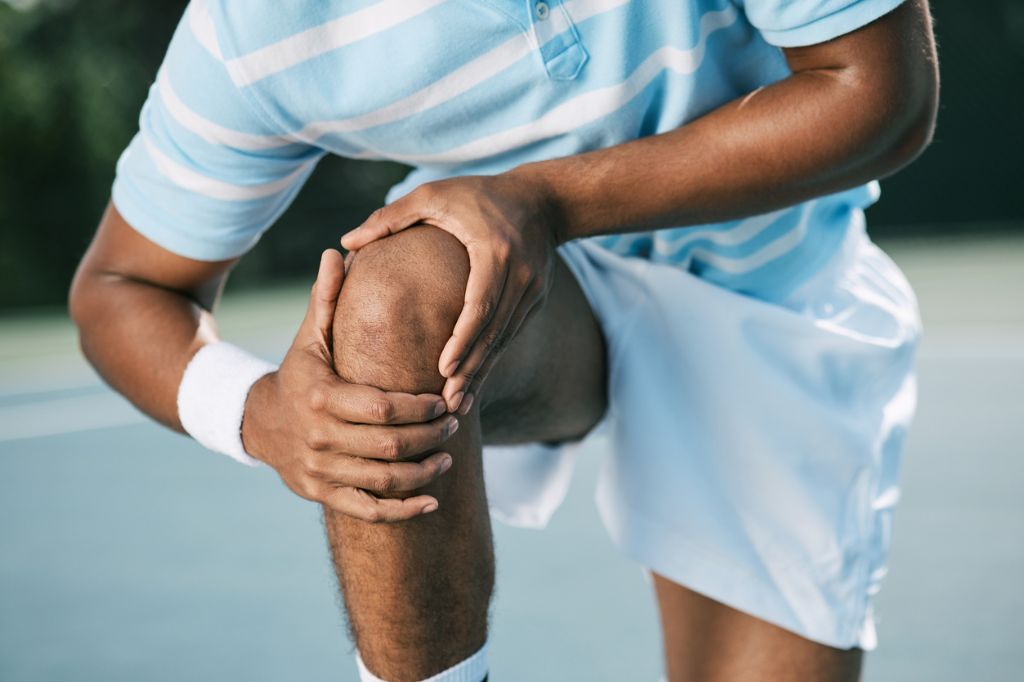
Bending your knee shouldn’t hurt. But if you wince every time you squat down to pick something up, struggle to kneel, or feel sharp pain when climbing stairs, you know how limiting knee pain when bending can be.
Your knee joint undergoes significant stress during bending movements. It has to support your body weight while coordinating the complex interplay of bones, cartilage, ligaments, tendons, and muscles. When any component of this system breaks down or becomes irritated, bending becomes painful.
The location and quality of your pain provide important clues about what’s going wrong. Some causes of knee pain when bending are minor and resolve with simple treatment. Others signal more significant problems that need medical attention.
The Mechanics of Bending Your Knee
Every time you bend your knee, several things happen simultaneously. Your kneecap (patella) slides up and down in a groove on your thighbone. The cartilage surfaces inside your joint compress and shift to accommodate the changing angle. Your menisci (shock-absorbing cartilage pads) get squeezed and move slightly. Ligaments tighten and relax to control the motion.
This coordinated movement requires all these structures to be healthy and working properly. When something goes wrong with any component, bending triggers pain.
Common Causes of Knee Pain When Bending
Patellofemoral Pain Syndrome (Runner’s Knee)
Runner’s knee causes pain around or behind your kneecap that worsens with bending, especially when going down stairs, squatting, or kneeling. The pain develops when your kneecap doesn’t track properly in its groove, creating abnormal pressure on the cartilage underneath.
You don’t have to run to develop this condition. Prolonged sitting with bent knees, muscle imbalances, or sudden increases in activity can all trigger patellofemoral pain. The pain typically feels achy and diffuse rather than sharp and localized.
Meniscus Tears
Your menisci are C-shaped pieces of cartilage that cushion your knee joint. A tear can happen from a sudden twist or develop gradually from wear and tear as you age. When you bend a knee with a torn meniscus, the damaged cartilage can catch or pinch, causing sharp pain along the joint line.
Many people with meniscus tears also notice clicking, catching, or locking sensations when bending their knee. The pain is typically worse with deep bending or twisting movements. You might feel it on the inner or outer side of your knee, depending on which meniscus is torn.
Patellar Tendinitis (Jumper’s Knee)
Patellar tendinitis affects the tendon connecting your kneecap to your shinbone. Repetitive jumping, squatting, or running can irritate this tendon, causing pain just below your kneecap that intensifies when you bend your knee under load.
The pain is typically sharp or burning and worsens with activities like squatting, climbing stairs, or jumping. You might also feel tenderness when pressing directly on the tendon below your kneecap.
Osteoarthritis
Osteoarthritis develops when the cartilage cushioning your knee joint wears down over time. As the cartilage deteriorates, bones can rub together, causing pain, stiffness, and swelling. Bending an arthritic knee compresses these damaged surfaces, triggering pain.
Morning stiffness that improves with gentle movement is characteristic of knee arthritis. The pain when bending typically feels deep and achy. You might also hear grinding or feel crepitus (a grating sensation) when you move your knee.
Bursitis
Several fluid-filled sacs called bursae cushion your knee joint. When these become inflamed, a condition called bursitis, bending can become very painful. The most commonly affected bursa sits just below your kneecap, causing pain and swelling that worsens with kneeling or bending.
Prepatellar bursitis (in front of your kneecap) often develops in people who kneel frequently. Pes anserine bursitis affects the inner side of your knee below the joint and causes pain with bending, especially when climbing stairs.
Ligament Injuries
Your knee has four major ligaments that provide stability. Sprains or tears in these ligaments can cause pain when bending, particularly if the movement stresses the injured ligament. ACL and PCL injuries often cause pain with deep bending, while MCL and LCL injuries may hurt more with side-to-side stress during bending movements.
Ligament injuries typically cause pain combined with feelings of instability. Your knee might feel like it’s going to give out when you bend it, especially on uneven surfaces or stairs.
IT Band Syndrome
Your iliotibial band is a thick strip of tissue running down the outside of your thigh to your knee. When this band becomes tight or inflamed, it can cause sharp pain on the outer side of your knee, particularly when bending it at specific angles (often around 30 degrees of flexion).
IT band syndrome is common in runners and cyclists. The pain typically worsens with activities like descending stairs or running downhill, where your knee repeatedly bends through the painful range.
Baker’s Cyst
A Baker’s cyst is a fluid-filled pocket that forms behind your knee, usually as a result of another knee problem like arthritis or a meniscus tear. When you bend your knee, this cyst gets compressed, causing a feeling of tightness or fullness in the back of your knee.
The sensation might feel like something is blocking your knee from bending fully. You may notice visible swelling in the back of your knee and discomfort that increases with prolonged standing or activity.
Plica Syndrome
A plica is a fold of tissue lining your knee joint. Most people have these folds without problems, but sometimes they become irritated and inflamed. When you bend your knee, the swollen plica can get pinched, causing sharp pain and sometimes a snapping sensation.
The pain from plica syndrome is typically felt on the inner front part of your knee. It often comes and goes and may be accompanied by a catching or popping feeling when you bend and straighten your knee.
Where Your Knee Hurts Matters
The location of your pain when bending provides valuable diagnostic information.
- Front of knee pain (around or below your kneecap) typically points to patellofemoral pain syndrome, patellar tendinitis, or quadriceps tendinitis. This is the most common pain pattern for kneecap-related problems
- Inner knee pain often indicates a medial meniscus tear, MCL sprain, pes anserine bursitis, or medial compartment arthritis. Pain on the inside of your knee when bending suggests problems with these inner structures
- Outer knee pain suggests IT band syndrome, lateral meniscus tear, LCL injury, or lateral compartment arthritis. Sharp pain on the outside of your knee during bending points to these conditions.
- Back of knee pain typically relates to Baker’s cysts, hamstring tendinitis, or PCL injuries. A feeling of fullness or tightness behind your knee when bending often indicates a Baker’s cyst.
- Deep joint pain that’s hard to pinpoint could indicate ACL or PCL injuries, loose bodies floating in the joint, or more advanced arthritis affecting multiple areas.
When to Seek Medical Attention for Knee Pain When Bending
Some knee pain resolves on its own with rest and home care. Other symptoms warrant evaluation by an orthopedic specialist:
- Pain that persists beyond two weeks despite conservative treatment
- Severe pain that limits your ability to bear weight
- Knee that locks, catches, or gives out when you bend it
- Visible swelling that doesn’t improve with ice and elevation
- Inability to fully bend or straighten your knee
- Grinding, clicking, or popping accompanied by pain
- Redness, warmth, or signs of infection
- Pain that wakes you at night
- Previous knee injury that now causes pain with bending
These symptoms suggest structural problems that need professional diagnosis and treatment.
Home Treatment for Knee Pain When Bending
For mild to moderate knee pain, these strategies often provide relief:
Rest and Activity Modification
You don’t need complete rest, but you do need to avoid activities that trigger significant pain. If deep squats hurt, stop doing them temporarily. If stairs are painful, take them one at a time or use the handrail for support.
Substitute lower-impact activities that don’t stress your knee in the same way. Swimming and cycling (if tolerable) maintain fitness while reducing knee stress.
Ice Therapy
Apply ice for 15-20 minutes several times daily, particularly after activities that cause pain. Ice reduces inflammation and numbs pain signals. Always use a barrier between ice and skin to prevent ice burns.
Ice works best for acute pain or flare-ups. If you’ve had chronic knee pain for months, ice provides temporary relief but won’t address the underlying problem.
Compression and Elevation
An elastic bandage or knee sleeve provides compression that can reduce swelling and give a sense of support. Don’t wrap so tightly that you restrict circulation.
Elevate your leg above heart level when resting to help drain fluid from your knee. This is particularly helpful if you have visible swelling.
Over-the-Counter Medications
Anti-inflammatory medications like ibuprofen or naproxen can help manage pain and reduce inflammation when taken as directed. Acetaminophen provides pain relief without anti-inflammatory effects and may be appropriate if you can’t take NSAIDs.
These medications work best as part of a comprehensive approach that includes rest, activity modification, and addressing the underlying cause of your pain.
Gentle Stretching
Tight muscles around your knee can contribute to pain when bending. Focus on stretching your quadriceps, hamstrings, and calves. Hold stretches for 30 seconds and avoid bouncing.
Hip stretches matter too. Tight hip flexors and IT bands can alter your knee mechanics and contribute to pain. Include figure-four stretches, hip flexor stretches, and IT band stretches in your routine.
Strengthening Exercises
Once acute pain subsides, strengthening the muscles around your knee provides better support and reduces stress on the joint. Focus on:
- Quadriceps (straight leg raises, wall sits, step-ups)
- Hamstrings (bridges, hamstring curls)
- Hip muscles (clamshells, side-lying leg raises, monster walks)
Start with exercises that don’t require deep knee bending and progress gradually as your pain improves.
Medical Treatments for Knee Pain When Bending
When home care isn’t enough, several medical treatments can help:
Physical Therapy
A structured physical therapy program addresses the specific cause of your knee pain through targeted exercises, manual therapy, and education on proper movement patterns. Your therapist will design a program based on your diagnosis and functional goals.
Physical therapy is often the most effective treatment for patellofemoral pain syndrome, IT band syndrome, and many other causes of knee pain when bending.
Injections
Corticosteroid injections can reduce inflammation in your knee joint, providing relief that lasts weeks to months for conditions like bursitis or arthritis. These injections deliver powerful anti-inflammatory medication directly to the affected area.
Hyaluronic acid injections may help people with knee osteoarthritis by improving joint lubrication. These typically require a series of injections over several weeks.
Platelet-rich plasma (PRP) injections use your body’s own healing factors to promote tissue repair. Dr. Martin Weaver, our Director of Orthobiologics, specializes in ultrasound-guided PRP injections for tendon and ligament injuries that haven’t responded to conservative treatment.
Bracing and Support
Depending on your specific condition, a knee brace can provide stability, reduce pain, and protect your joint during activities. Patellar tracking braces help with runner’s knee. Unloader braces can reduce pain from arthritis by shifting weight away from the damaged compartment.
Surgical Options
Surgery becomes an option when conservative treatments haven’t provided adequate relief and structural problems are limiting your function:
- Arthroscopy is a minimally invasive procedure used to repair meniscus tears, remove loose bodies, trim damaged cartilage, or address other internal knee problems.
- Ligament reconstruction stabilizes knees with significant ACL, PCL, or other ligament tears that cause instability during bending and other activities.
- Partial or total knee replacement may be recommended for advanced arthritis that hasn’t responded to other treatments and significantly limits your quality of life.
The team at Orthopedic Specialty Institute specializes in the full range of knee procedures, always choosing the least invasive approach that will deliver lasting results.
Preventing Knee Pain When Bending
Whether you’re recovering from knee pain or hoping to prevent it, these strategies protect your knees:
Maintain Strong Leg Muscles
Strong quadriceps, hamstrings, and hip muscles provide better support for your knee joint and reduce stress on cartilage and other structures. Include strength training at least twice weekly.
Weak hip muscles (particularly gluteus medius) contribute to knee pain by allowing poor alignment during movement. Side-lying leg raises, clamshells, and lateral band walks strengthen these important stabilizers.
Keep a Healthy Weight
Every extra pound you carry adds several pounds of pressure on your knees, particularly during activities that involve bending. Even modest weight loss can significantly reduce knee pain and slow arthritis progression.
Warm Up Before Activity
A proper warm-up prepares your knees for the demands of exercise. Include dynamic stretches and 5-10 minutes of easy movement before increasing intensity. This increases blood flow, improves joint lubrication, and activates the muscles that support your knee.
Use Proper Form
Poor movement patterns place unnecessary stress on your knees. Common form issues that contribute to knee pain include:
- Knees caving inward during squats or lunges
- Landing from jumps with locked knees
- Running with overstriding or excessive heel strike
- Squatting or lunging with knees tracking far past your toes
Working with a trainer or physical therapist can help you identify and correct problematic movement patterns.
Progress Activity Gradually
Sudden increases in activity level are a common cause of knee pain. If you’re starting a new exercise program or increasing training intensity, progress gradually. The 10% rule applies: don’t increase volume, intensity, or frequency by more than 10% per week.
Address Tightness and Imbalances
Tight muscles and muscle imbalances alter your knee mechanics and increase injury risk. Stretch regularly, focusing on areas that tend to get tight: hip flexors, IT band, quadriceps, hamstrings, and calves.
If you have structural issues like flat feet or leg length discrepancies, orthotics or shoe modifications can improve your knee alignment and reduce pain.
Listen to Pain Signals
Mild muscle soreness after exercise is normal. Sharp pain, persistent aching, or pain that worsens with continued activity signals a problem. Pushing through significant knee pain rarely ends well.
If bending your knee hurts, modify activities temporarily to allow healing. Continuing to aggravate an injured knee often transforms a minor problem into a chronic condition.
Get Expert Care for Knee Pain
Knee pain when bending can interfere with everything from your exercise routine to basic daily activities like climbing stairs or getting in and out of your car. You don’t have to live with this limitation.
At Orthopedic Specialty Institute, our team has extensive experience diagnosing and treating the causes of knee pain when bending. Early evaluation often leads to faster recovery and better outcomes. We’ll identify what’s causing your pain and create a treatment plan that gets you back to moving comfortably.
Located in Fort Lauderdale, Orthopedic Specialty Institute proudly serves patients throughout South Florida, including Broward County, Palm Beach County, and Miami-Dade County. Request an appointment today.
